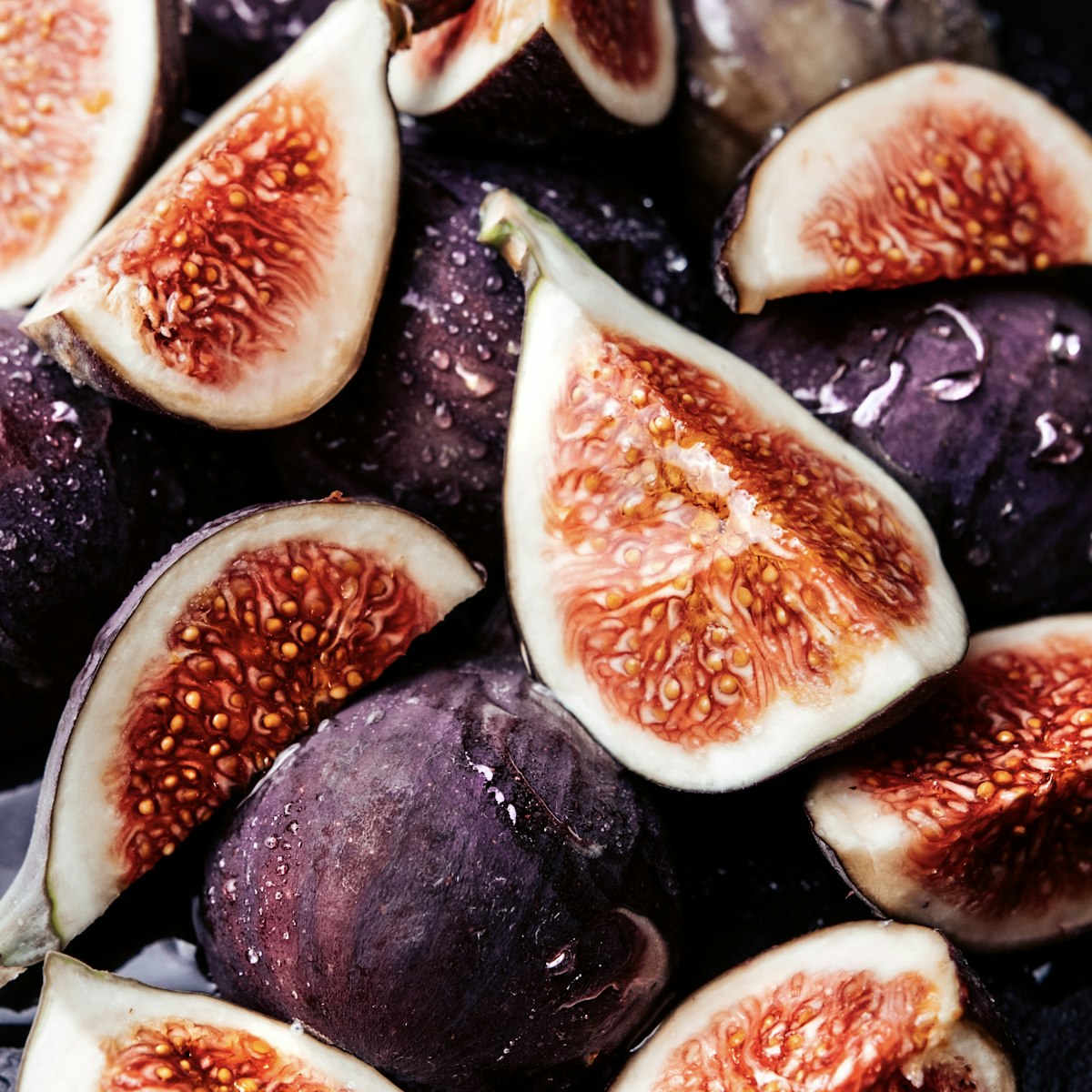
Fresh figs have a short season and most people miss it. They're at peak from mid-August through September, and the window to get them truly ripe, at full sweetness, is narrow. Once October hits, they're gone. If you've only ever seen figs in dried form or inside a fig Newton, this is your year to finally cook with the real thing.
They're worth the attention. A ripe fig tastes like honey and berries had a quiet conversation, with a texture that's jammy without being mushy. And unlike a lot of seasonal produce, fresh figs work in both sweet and savory applications without any awkward bridging. The flavor is naturally rich enough to stand next to salty cheese and cured meat, but soft enough to fold into a cake batter.
How to Pick a Good Fig
This is the part that trips people up. Most grocery-store figs are underripe because they don't travel well. You want a fig that's deeply soft when you press it gently, almost like squeezing a stress ball. The skin should have a slight wrinkle at the neck. If it's firm, it needs another day or two at room temperature. Don't refrigerate unripe ones.
Black Mission figs are the most common variety and work for everything. Brown Turkey figs are milder and hold their shape better in cooked applications. Calimyrna figs (light green or yellow) are nuttier and great raw on a cheese board.
Once ripe, figs keep for only two or three days in the refrigerator. So plan your meals accordingly. Don't buy a pint and let them sit.
The Fastest Thing You Can Make: Honey Ricotta Toast
Slice two ripe figs in half. Toast thick bread, spread generously with whole-milk ricotta, lay the figs cut-side up, drizzle with honey, finish with flaky salt and fresh thyme or black pepper. That's it. Fifteen minutes including waiting for the toast.
It sounds simple because it is. But ripe figs with good ricotta and flaky salt hit in a way that feels restaurant-worthy. It's the kind of breakfast that makes you feel like you've got your life together.
Savory Applications That Actually Work
The sweet-savory angle is where figs really separate themselves from other fruit. A few combinations that hold up:
Prosciutto and figs on a flatbread. Scatter torn prosciutto, halved figs, and small mozzarella balls on a pre-baked flatbread base. Finish under the broiler for three minutes, then pull it and drizzle with a little aged balsamic. The salt from the prosciutto and the sweet acid from the figs create a balance that doesn't need much else.
Figs with blue cheese and walnuts. This is a straight-up cheese board move. Gorgonzola dolce or Roquefort with fresh figs and toasted walnuts is a combination that's been working for centuries for a reason. Add some honey and a handful of arugula and you have a light salad instead.
Pan-seared duck breast with fig pan sauce. Cut three ripe figs in half, cook them cut-side down in the duck fat left in the pan after you've rested the meat, add a splash of red wine and a tablespoon of butter, let it reduce. It takes five minutes. The sauce is jammy, savory, and sharp.
Roasted beets with fresh figs and goat cheese. Slice roasted beets and raw figs onto a plate, crumble goat cheese over the top, add a handful of pistachios, finish with a simple sherry vinegar vinaigrette. It's a salad worth ordering, and it takes about ten minutes if your beets are pre-roasted.
Simple Desserts Without Much Effort
Halved figs roasted with honey go with almost everything. Preheat your oven to 400°F. Place fig halves cut-side up in a baking dish, drizzle with honey and a little balsamic vinegar, roast for 15 to 20 minutes until they're soft and slightly caramelized. Serve over vanilla ice cream, Greek yogurt, or pound cake. They're great warm or at room temperature.
Fig clafoutis is worth knowing. It's a French baked custard with fruit, and it sounds fancier than it is. Whisk together eggs, milk, flour, sugar, and vanilla, pour it over halved figs in a buttered baking dish, bake at 375°F for 35 minutes until puffed and golden. Let it cool slightly, dust with powdered sugar, and serve it directly from the dish. It collapses a bit as it cools, which is normal. The texture is somewhere between a crepe and a flan.
Fig jam from scratch takes about 30 minutes if you have a glut of ripe figs. Roughly chop them, add sugar (about half the weight of the figs), a squeeze of lemon juice, and cook it over medium heat until it thickens and coats the back of a spoon. Pour it into a clean jar. It keeps in the refrigerator for three weeks and works on everything from cheese boards to morning toast to glazing roasted chicken.
Scaling When You're Cooking for a Crowd
This is where figuring out quantities gets annoying. If you're making the roasted fig and honey dessert for eight people instead of two, how many figs do you need? SnipDish's recipe scaling tool handles this automatically so you're not doing math at the grocery store. Open any recipe in the app, adjust the servings, and your ingredient list updates instantly.
Cook Mode is also useful when you're juggling multiple elements. Working on a fig flatbread while the duck rests while the sauce reduces requires actually keeping track of where you are in each recipe. The step-by-step view keeps each element in sequence without you having to flip back through the full recipe.
Before Figs Disappear
Fresh fig season is one of those narrow windows where the effort-to-payoff ratio is completely in your favor. They require almost no prep, they work in fifteen-minute dishes and hour-long projects alike, and most of the best applications aren't complicated.
Go to a farmers market this week if you have one nearby. The selection there is usually better than the grocery store, and you can actually smell and feel the figs before you buy them.
The dried-fruit version is fine. But it's not this.