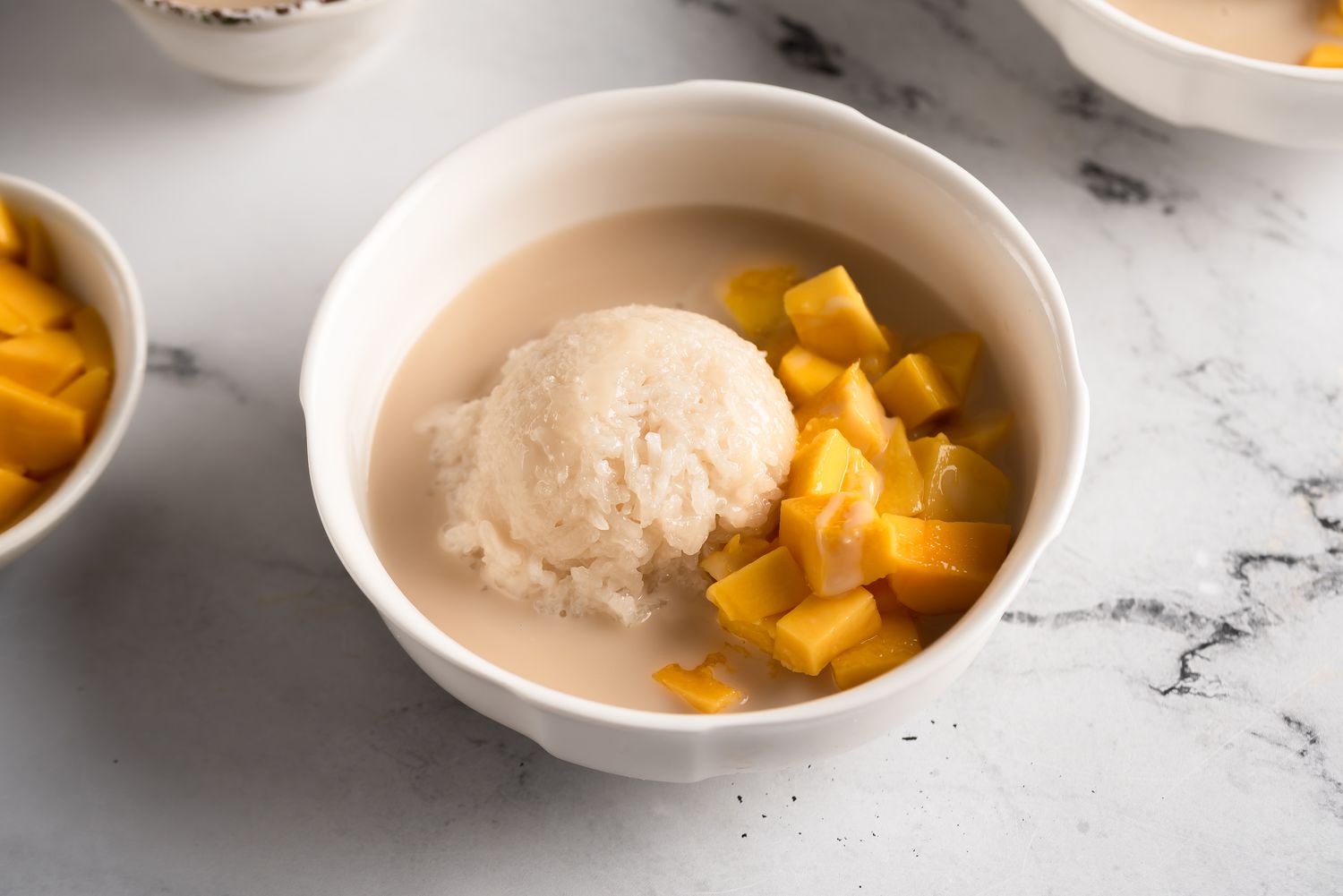
If you've been on TikTok or Instagram in the past few weeks, you've seen it. Glossy mango slices fanned over a mound of creamy white rice, a slow pour of coconut sauce drizzling down the sides. Comments full of "MAKING THIS TONIGHT" and "I had this in Bangkok and cried." Mango sticky rice — khao niao mamuang in Thai — is officially having its cultural moment in summer 2026, and it couldn't be better timed.
June is peak mango season. Ataulfo (Champagne) mangoes are at their sweetest, Honey mangoes are everywhere at Asian grocery stores, and even standard grocery store mangoes are actually good right now. The stars have aligned for this dish, and if you've been curious about making it at home, this is your sign.
Here's the thing: it looks restaurant-fancy, but it's genuinely one of the simpler desserts you can make once you understand what's actually going on.
What Makes It Work
Mango sticky rice is a study in contrast. The rice is dense and chewy, soaked in sweetened coconut milk that makes it rich without being heavy. The mango is cold, bright, and acidic. The sauce — a thin drizzle of salted coconut cream — adds a savory edge that ties everything together.
That salted coconut drizzle is the part most home cooks miss, and it's what makes this dish extraordinary instead of just good. Without it, you've got sweet rice and fruit. With it, you've got a dessert that feels complete.
The Ingredients You Need
For the rice:- 1½ cups glutinous rice (also called sticky rice or sweet rice — not regular rice, not jasmine rice)
- 1 cup full-fat coconut milk
- 3 tablespoons sugar
- ½ teaspoon salt
- ½ cup full-fat coconut milk
- 1 tablespoon sugar
- ¼ teaspoon salt
- 1 teaspoon cornstarch mixed with 1 tablespoon water (optional, to thicken slightly)
- 2 ripe mangoes (Ataulfo or Honey variety if possible), sliced
- Toasted sesame seeds or mung beans (optional, for garnish)
The Method: Step by Step
Step 1: Soak the rice overnight (or at least 4 hours)
This is non-negotiable. Glutinous rice needs a long soak before it steams properly. Rinse it until the water runs mostly clear, then cover with cold water and let it sit. If you forgot to soak overnight, 4 hours at room temperature works in a pinch — but longer is better.
Shortcut alert: Some recipes say you can skip soaking and use an Instant Pot. It works, but the texture is slightly less chewy. For a crowd-worthy version, soak overnight.
Step 2: Steam the rice
Traditional method uses a bamboo steamer basket lined with cheesecloth. If you don't have one, a fine-mesh strainer set over a pot of simmering water works. The rice should not touch the water — you want steam only.
Steam for 20–25 minutes, flipping the rice ball halfway through. It's done when it's translucent and tender but still has chew.
Step 3: Make the coconut mixture
While the rice steams, combine 1 cup coconut milk, 3 tablespoons sugar, and ½ teaspoon salt in a small saucepan. Heat over medium-low, stirring until the sugar dissolves. Do not boil — just warm it through.
Step 4: Soak the hot rice
Transfer the steamed rice to a bowl and pour the warm coconut mixture over it immediately. Stir gently, then cover and let it absorb for 15–20 minutes. The rice will drink up that coconut milk and transform from dry to luxuriously creamy.
This is the timing-sensitive moment. The rice needs to be hot when it meets the coconut milk, and you need to let it sit long enough to fully absorb. This is also where SnipDish's Cook Mode shines — it locks your screen on and keeps the timer running so you don't lose track of the soak time while you're prepping the mango.
Step 5: Make the sauce
Combine ½ cup coconut milk, 1 tablespoon sugar, and ¼ teaspoon salt in the same small pan. Heat over medium until just simmering. If you want a thicker drizzle, stir in the cornstarch slurry and cook for another minute until slightly thickened. Remove from heat and let cool slightly — it should be pourable but not thin.
Step 6: Slice the mango and plate
Cut the mango cheeks off the pit and slice thinly. Mound the coconut rice in a shallow bowl or on a plate, fan the mango alongside it, and drizzle the sauce over everything. Sprinkle with sesame seeds or crispy split mung beans if you have them — they add texture and a nutty flavor that's traditional in Thailand.
Common Mistakes (and How to Avoid Them)
Using the wrong rice. Regular long-grain rice or jasmine rice will not work. You need glutinous rice — it's sold at Asian grocery stores and online. The bag will say "glutinous," "sweet rice," or "sticky rice." Skipping the soak. Under-soaked rice steams unevenly. Some grains will be hard in the center. Soak it. Using light coconut milk. Full-fat only. This is a dessert. Light coconut milk tastes thin and watery here. Cold rice, cold coconut milk. The absorption step only works when both the rice and the coconut mixture are warm. If your coconut mixture has cooled down, reheat it before combining. Over-sweetening. The mango provides the sweetness. You want the rice to be creamy and subtly sweet, not candy-sweet. Dial back the sugar if your mangoes are very ripe.Scale It for a Party
This dessert scales beautifully. Making it for a dinner party of eight? Triple the rice and coconut mixture, steam in batches if needed. The sauce can be made a day ahead and refrigerated — just reheat gently before serving.
SnipDish's recipe scaling tool handles the math automatically. Scale the base recipe to whatever number of servings you need and every ingredient adjusts instantly — no mental math, no guessing.
Why This Dish Is Trending Right Now
A few things converged at once. Mango sticky rice rolls went viral on Instagram in late May — someone figured out how to roll the coconut rice in a sheet of plastic wrap with mango inside, creating a cross-section that photographs like a dream. That riff exploded, and people went back to the original to understand the base recipe.
There's also a broader movement right now around Southeast Asian desserts. Ube has been dominant for a couple of years, matcha is everywhere, and mango sticky rice feels like the next wave — a dish with deep cultural roots that also happens to be visually stunning and genuinely delicious.
And honestly? The timing is just right. Peak mango season, hot weather, and a dessert that requires zero oven time. That combination wins every June.
Variations Worth Trying
- Pandan-infused rice: Add 2 pandan leaves knotted together to the rice while it steams. The subtle floral flavor is a traditional variation common in parts of Southeast Asia.
- Black sticky rice: Swap half the white glutinous rice for purple/black sticky rice for a dramatic color contrast and a slightly earthier, nuttier flavor.
- Mango sticky rice rolls: Lay a sheet of plastic wrap flat, spread warm coconut rice in a rectangle, place mango slices across one edge, roll tightly into a log, and refrigerate for 30 minutes before slicing. The cross-section is stunning.
- Strawberry version: Out of mango? Ripe strawberries sliced thin work surprisingly well — the acid hits differently but still plays well with the creamy coconut rice.
Storing and Making Ahead
The rice is best the day it's made — it stiffens in the fridge and doesn't reheat perfectly. If you need to make it ahead, store the rice at room temperature (covered) for up to 8 hours. The sauce refrigerates well for 2 days. Mangoes should be cut fresh.
If you have leftover coconut rice, it makes an excellent breakfast the next morning. Slightly firm, eaten cold with fresh fruit — it's a surprisingly satisfying morning bowl.
Mango sticky rice is one of those dishes that earns a permanent spot in your rotation the first time you nail it. The ingredients are simple, the technique is learnable, and the result is the kind of dessert that makes people ask "where did you get this?" before you tell them you made it yourself.
Pull up the full recipe in SnipDish, switch on Cook Mode for the steaming and soak timers, and give it a go this week. Mango season doesn't last forever.