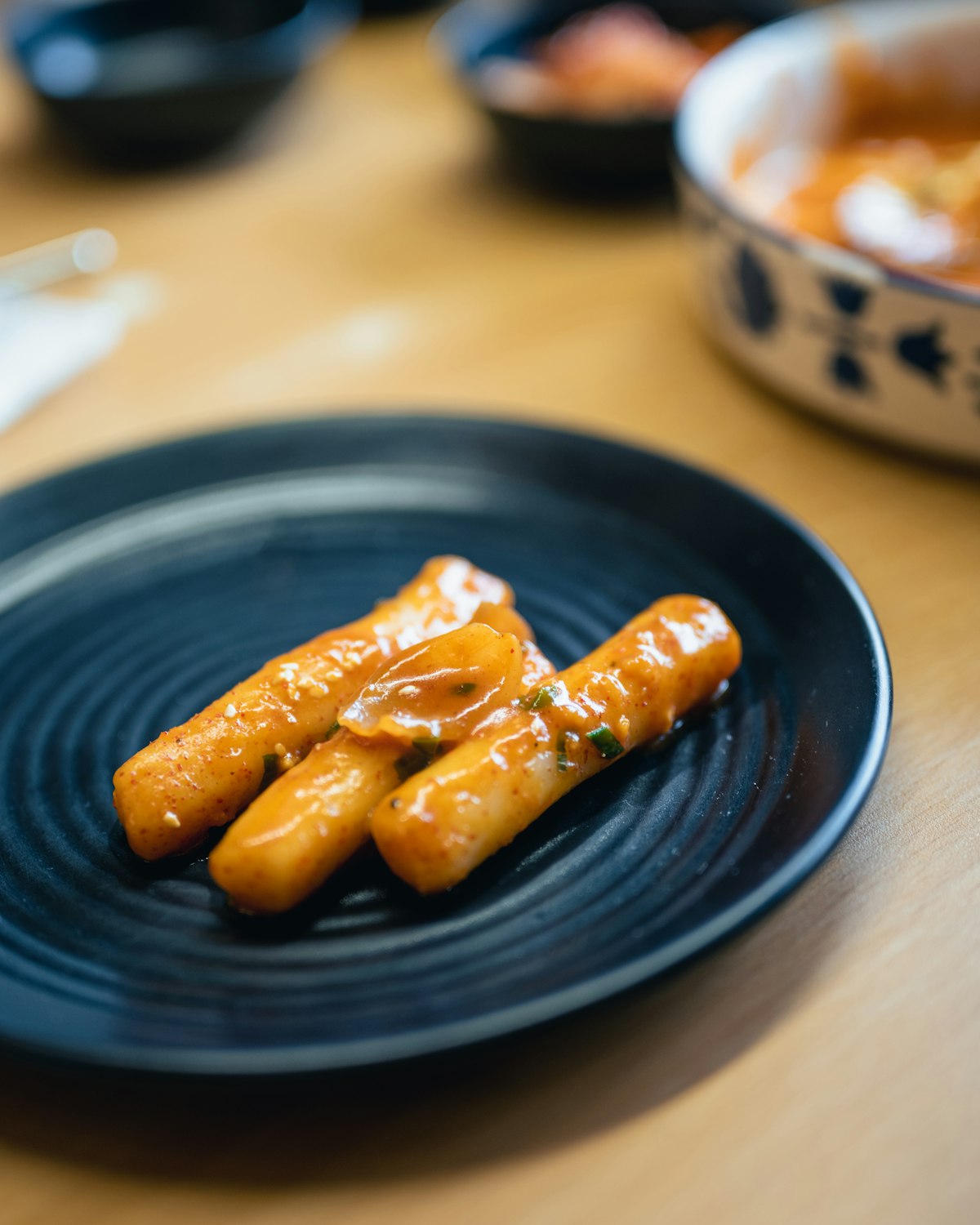
Tteokbokki at Home: How to Make Korea's Most Addictive Street Food
If you've scrolled through food TikTok or wandered past a Korean restaurant lately, you've probably seen tteokbokki (떡볶이) — those glossy, chewy rice cakes swimming in a fiery red sauce. It's Korea's most beloved street food, and it's having a massive moment in home kitchens worldwide.
The best part? It takes about 20 minutes and a handful of ingredients you can find at any Asian grocery store (and increasingly, at regular supermarkets too).
What Exactly Is Tteokbokki?
Tteokbokki is made from garaetteok — cylindrical rice cakes with a dense, chewy texture unlike anything in Western cooking. They're simmered in a sauce built on gochujang (fermented red chili paste) and gochugaru (red pepper flakes), sweetened with sugar, and rounded out with anchovy or kelp broth.
The result is sweet, spicy, savory, and deeply satisfying. Think of it as Korea's answer to mac and cheese — pure comfort food.
The Essential Ingredients
Here's what you need for a classic tteokbokki serving 2–3 people:
- 1 lb (450g) Korean rice cakes — fresh or frozen (thaw frozen ones in water for 30 minutes)
- 4 cups anchovy or kelp broth — instant dashida works in a pinch
- 2 tbsp gochujang (fermented red chili paste)
- 1 tbsp gochugaru (Korean red pepper flakes) — adjust for heat
- 1 tbsp soy sauce
- 1 tbsp sugar (or corn syrup for that glossy street-food look)
- 2–3 sheets eomuk (Korean fish cakes), sliced into triangles
- 2–3 green onions, cut into 2-inch pieces
Optional but Worth It
- A hard-boiled egg or two
- Shredded mozzarella (yes, cheese tteokbokki is a thing — and it's incredible)
- Ramen noodles (rabokki = ramen + tteokbokki, a modern classic)
- Sliced cabbage for extra bulk
Step-by-Step: Classic Tteokbokki
1. Make the Broth Base
Bring 4 cups of broth to a boil in a wide, shallow pan or pot. If you're using dried anchovies and kelp, simmer them for 10 minutes, then strain.
Pro tip: A wide pan gives the sauce more surface area to reduce and coat the rice cakes evenly. Don't use a tall, narrow pot.
2. Build the Sauce
Stir in the gochujang, gochugaru, soy sauce, and sugar. Whisk until everything dissolves. Taste it — it should be slightly sweeter and spicier than you want the final dish, since the rice cakes will absorb a lot of flavor.
3. Add the Rice Cakes
Drop in the rice cakes and fish cakes. If your rice cakes were frozen, make sure they're fully thawed first — frozen ones won't cook evenly.
4. Simmer and Stir
Cook over medium heat for 8–12 minutes, stirring frequently. The sauce will thicken as the starch from the rice cakes releases. You want it glossy and coating the back of a spoon.
Watch the texture: Rice cakes go from perfectly chewy to mushy fast. Start checking at 8 minutes. They should be soft but still have bounce.
5. Finish and Serve
Toss in the green onions in the last minute. Serve immediately — tteokbokki stiffens as it cools, so eat it hot.
Three Variations Worth Trying
🧀 Cheese Tteokbokki
Pile shredded mozzarella on top during the last 2 minutes and cover with a lid. The melted cheese tempers the heat and adds ridiculous stretchy pulls.
🍜 Rabokki (Ramen + Tteokbokki)
Add a block of instant ramen noodles (discard the seasoning packet) during the last 3–4 minutes of cooking. The noodles soak up that sauce beautifully.
🥜 Creamy Rose Tteokbokki
Mix in 2–3 tablespoons of heavy cream and a tablespoon of tomato paste for the "rosé" version that's been all over Korean food blogs. It's milder, creamier, and dangerously easy to eat.
Tips for Nailing It Every Time
On the rice cakes: Fresh rice cakes from a Korean grocery are ideal. If using frozen, soak in room-temperature water for at least 20–30 minutes. Never microwave them to thaw — you'll get uneven texture. On the heat level: Start with less gochugaru and add more at the end. You can always go spicier, but you can't undo it. A little honey or extra sugar helps if you overshoot. On the broth: Anchovy-kelp broth is traditional and gives the best depth. But even plain water with a teaspoon of dashida (Korean soup base) works well for a weeknight version. On leftovers: Tteokbokki doesn't store great — the rice cakes harden in the fridge. If you must, reheat with a splash of water over low heat. Better yet, just make the right amount. This is where recipe scaling comes in handy — if you're using SnipDish to save your tteokbokki recipe, the scaling feature adjusts ingredient quantities so you can make exactly enough for however many people you're feeding.Why Tteokbokki Is Perfect for Home Cooks
This is one of those recipes that delivers way above its difficulty level. Twenty minutes, one pan, cheap ingredients, and you get something that tastes like you spent all afternoon cooking. It's also endlessly customizable — once you have the base sauce down, you can riff on it every week.
If you're working from a recipe you found online, try saving it to SnipDish. Cook Mode keeps your screen on and walks you through step by step, which is especially handy when your hands are covered in gochujang. And if you find a great recipe in Korean and need to parse the ingredients list, SmartFind can pull it from any webpage — just paste the URL.
The Bottom Line
Tteokbokki is one of those dishes that converts people. The chewy texture, the sweet-spicy sauce, the sheer comfort of it — once you make it at home, you'll wonder why you waited so long.
Give it a try this week. Your kitchen will smell amazing, and you'll have a new weeknight go-to that comes together faster than ordering takeout.
Want to save this recipe and scale it for your next dinner? Try SnipDish free — save recipes from anywhere, scale ingredients, and cook hands-free.