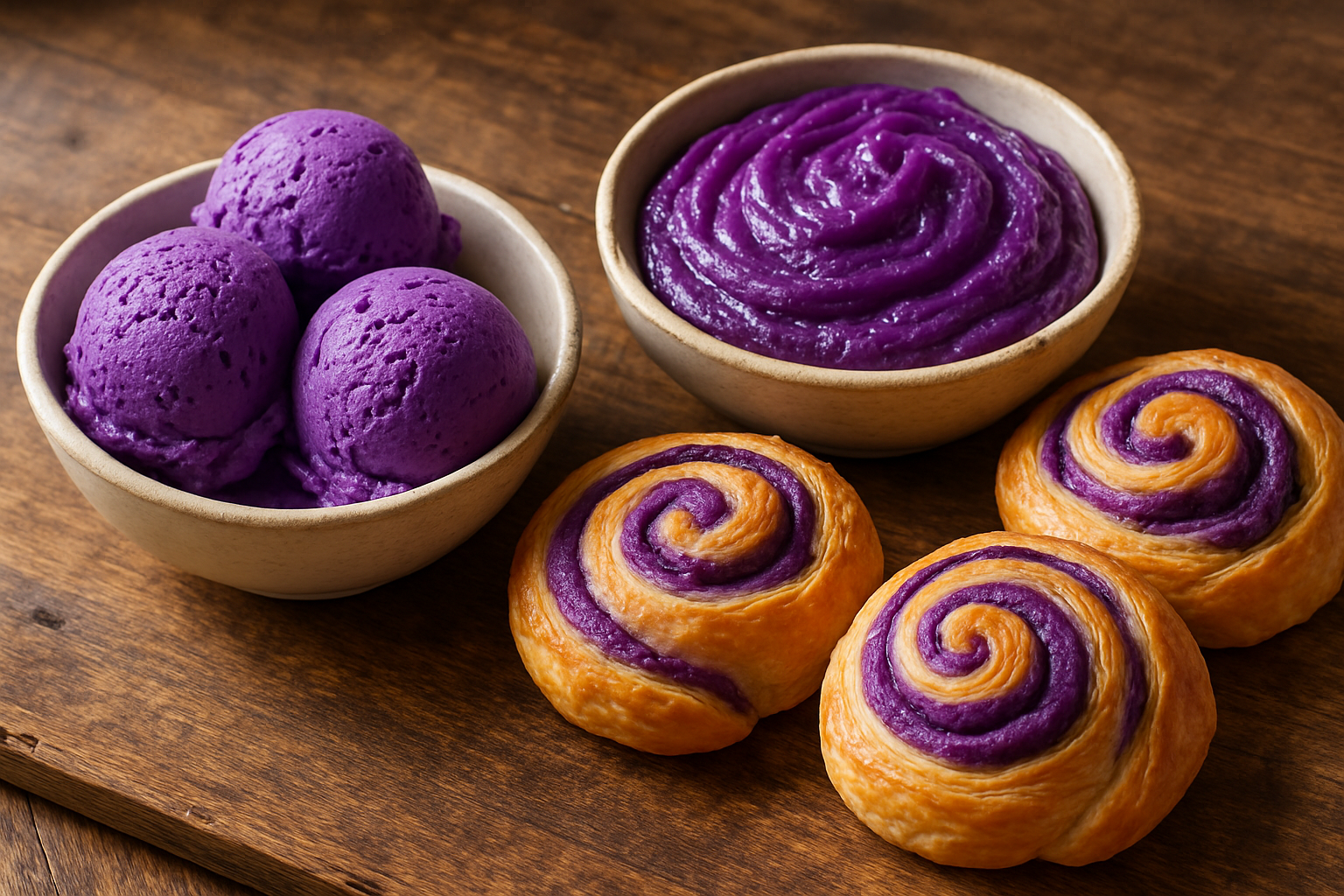
If you've been scrolling food content lately and wondering what that impossibly vivid purple stuff is — you've found ube. It's in the lattes, the pastries, the ice cream, the pasta, and somehow it just keeps showing up. Search interest has surged past 670,000 monthly searches, CNBC reported a supply crunch in the Philippines just this week, and food editors everywhere are calling it one of the defining ingredients of 2026.
But what actually is it? And more importantly — what do you do with it?
What Is Ube?
Ube (pronounced oo-beh) is a purple yam native to the Philippines. It's been central to Filipino cooking and baking for generations, but over the last year it's exploded globally thanks to social media and a wave of Filipino-American chefs and food creators bringing it into the mainstream.
Unlike purple sweet potato — which it's often confused with — ube has a distinctly sweeter, more delicate flavor. The closest comparison is vanilla with a hint of nuttiness, plus that unmistakable earthy sweetness that makes it work in both desserts and savory dishes. And the color? It's not a dye. That deep jewel-toned purple is completely natural.
It's worth knowing what form you're working with:
- Fresh ube — grated or mashed, available at Asian grocery stores
- Ube halaya — a thick jam made by cooking ube with coconut milk, butter, and sugar. This is the classic Filipino base.
- Ube powder — shelf-stable, widely available online, easy to work with at home
- Ube extract — concentrated flavor, often used in baking for bold color without the bulk
For most home cooks, ube powder or ube halaya is the easiest entry point.
Why Is Ube Everywhere Right Now?
A few forces collided at once.
It photographs like nothing else. In an era where food lives on your phone screen first, ube's deep lavender-to-violet color range stops the scroll. Purple is rare in natural food, and that scarcity makes it feel special — both on plates and in the algorithm. Filipino cuisine has arrived. After years of being underrepresented, Filipino chefs and food creators have built massive audiences, and ube has come along for the ride. It's not a trend invented by marketers — it's a beloved ingredient finally getting its moment. It bridges sweet and sophisticated. Ube works in the space where matcha used to live: it's subtle enough for grown-up palates, vibrant enough to be exciting, and versatile enough to appear in a black sesame latte one hour and a cloud bread the next.6 Ways to Start Cooking With Ube
1. Ube Halaya (Purple Yam Jam)
This is ground zero for ube cooking. Simmer grated ube or ube powder with coconut milk, butter, and condensed milk until thick. The result is a gloriously purple, silky jam that you can spread on toast, swirl into yogurt, use as a pastry filling, or eat directly off the spoon. No judgment.
2. Ube Latte
Whisk 1–2 teaspoons of ube powder with a splash of hot water until smooth, add warmed oat milk or whole milk, and a shot of espresso or strong coffee. It's the purple answer to a matcha latte — floral, sweet, and stunning in a clear glass.
3. Ube Ice Cream
If you have an ice cream maker, ube ice cream is one of those make-it-once-and-never-go-back recipes. A base of heavy cream, milk, sugar, and ube halaya churned until frozen produces a scoop that's more beautiful than anything at a scoop shop. No machine? A no-churn version with whipped cream works beautifully.
4. Ube Pancakes
Swap a couple tablespoons of your usual pancake flour for ube powder and add a splash of coconut milk. The stack comes out a pale lilac color with a hint of sweetness that pairs perfectly with toasted coconut and a drizzle of honey. This is the easiest weekday use of the trend.
5. Ube Cheesecake
Fold ube halaya into a classic no-bake cheesecake filling and pour it over a graham cracker crust. The purple layered against the tan crust looks like something from a pastry counter downtown, but it comes together in 20 minutes plus chill time.
6. Ube Pasta (The Unexpected One)
Yes, really. Blend ube halaya into a butter and cream sauce, toss it with fresh pasta, and finish with parmesan and black pepper. The sauce turns a muted lavender, the sweetness of the ube plays against the salt of the cheese, and the result is one of those "I wasn't sure about this but now I'm making it weekly" dishes.
Tips for Cooking With Ube
Don't fight the color. Part of ube's appeal is visual. Pair it with whites (cream cheese, coconut cream, condensed milk) and neutrals (vanilla, oat, brown sugar) that let the purple pop rather than muddy it. Ube powder can be gritty. If using it directly in a recipe, bloom it in a small amount of hot water first. This gives it a smoother texture and deeper color. The flavor is subtle. If you're expecting something as punchy as matcha, recalibrate. Ube's flavor is quiet — sweet and earthy, almost vanilla-adjacent. Don't undersalt your savory applications. Scaling matters. Ube dessert recipes are particularly sensitive to ratio changes because the starch content of ube affects set and texture. If you need to scale a recipe up or down — say, making a half batch of halaya or doubling an ice cream recipe — SnipDish's built-in recipe scaler adjusts everything automatically so your ratios stay right.Where to Find Ube
Most Asian grocery stores stock ube in at least one form — fresh, frozen grated, or as halaya. Filipino grocery stores are the best bet for the full range. Online, ube powder is readily available on Amazon, and brands like Butterfly and Flavocol are widely recommended.
One note: supply has tightened slightly due to the global surge in demand. If you can find ube halaya in jars, stock up. It keeps well in the refrigerator and is the most versatile form to have on hand.
Save Your Ube Recipes
Once you start exploring ube, you'll find yourself pulling recipes from Instagram, food blogs, YouTube, and everywhere in between. That's exactly what SnipDish's SmartFind feature is built for — paste any recipe URL and it pulls the ingredients and steps into your collection, clean and organized, ready to scale or cook through with Cook Mode.
Your purple yam era is just getting started.
Ready to build your ube recipe collection? Try SnipDish free — save, scale, and cook any recipe from anywhere on the web.